The Current Zeitgeist
The world *mostly the United States* is in shambles, we can all agree with this objective statement. The C-virus is running its course, businesses are closed, people lost their jobs, people were dying, and the government is challenging civil liberties to combat this pandemic. To add insult to injury, George Floyd was wrongfully killed by the police, leaving a family in mourning. This sparked protests, riots, and debates about race relations in the U.S. People are trying to figure out if things changed for black people.
I’m black and first-generation American born; my parents are from Barbados. Therefore, I have a dog in this race…no pun intended. However, I’ll spare your eyes from my opinions because this is a rabbit hole that I don’t want to jump in. Many creators use their art to express their views about these social issues, like Spike Lee. Spike is a world-renowned filmmaker that tackles the nitty-gritty of the social problems plaguing the black community and gives a mainstream audience a glimpse into the black experience. I admire that he’s daring to pursue the hard subject matter, utilizing a black cast (People of color, as the kids say these days). However, I’m not a fan of Spike Lee.

Wait! Before you revoke my black card, many people called my black card into question in the past, but I digress. I’m cool with his ideology, but I’m not too fond of the methods he uses to showcase said ideology. I’ll explain later. So lets review, Da 5 Bloods.
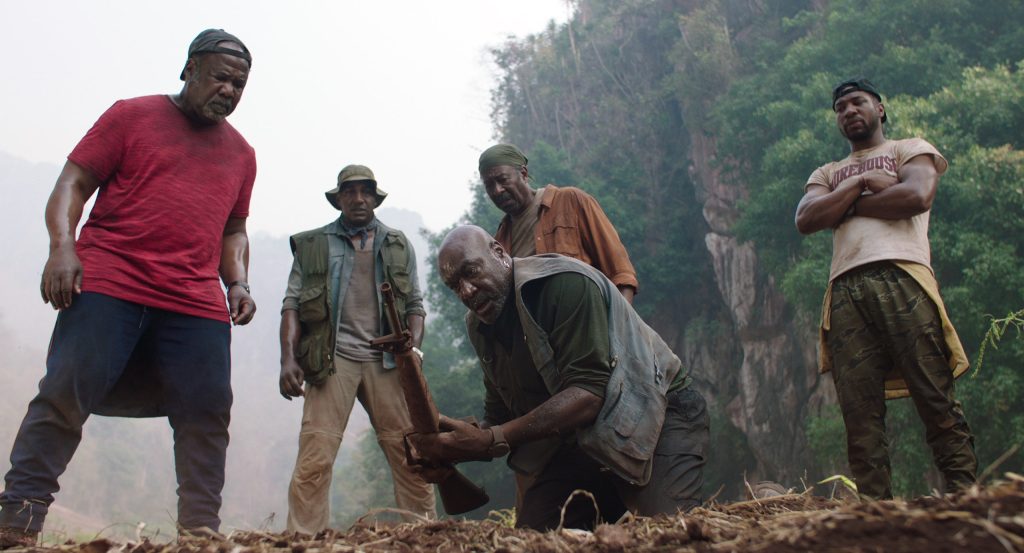
“We fought in an immoral war that wasn’t ours, for rights we didn’t have.”
-Paul (Delroy Lindo)
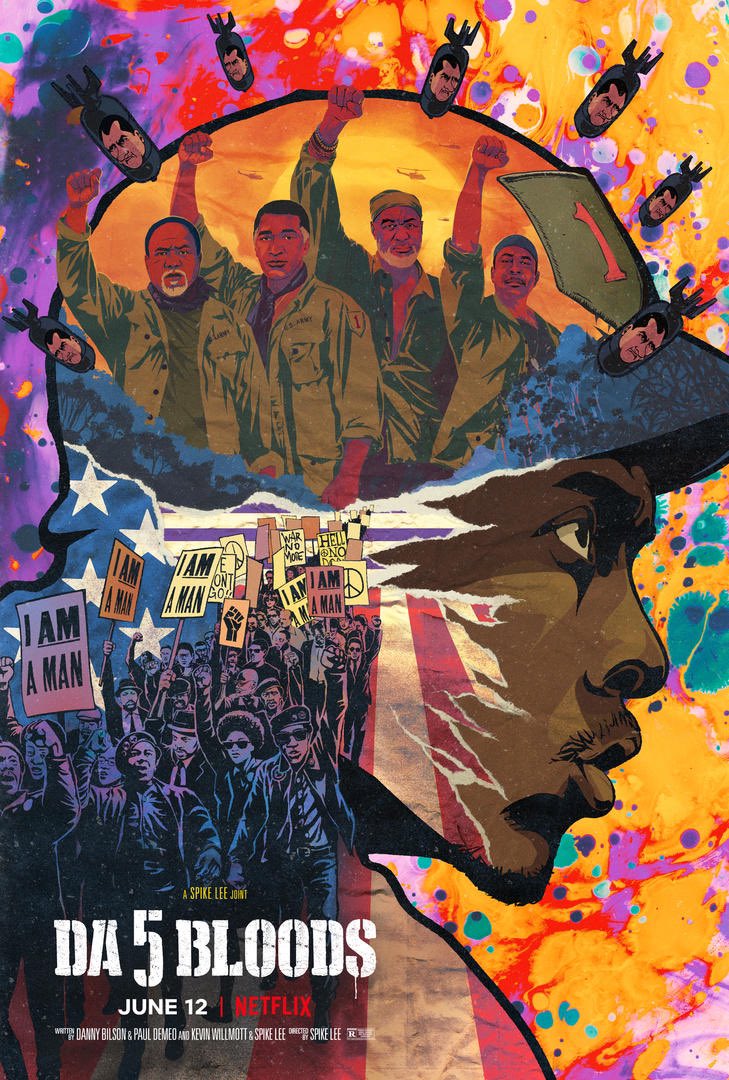
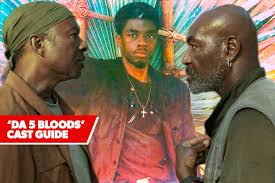
This film follows four Vietnam vets (Otis, Melvin, Paul, and Eddie) that returned to Vietnam to recover the remains of their fallen squadmate, Norman, who was killed back in 1967. Besides the four Bloods, Paul’s son, David tags along to search for gold that they buried with Norman. In 1967, they were tasked to retrieve the gold for the U.S government but decided to keep it for themselves and help the black community at home. Other people are looking for gold as well. One this trip, they reminisce the glory days of fighting alongside the brave “Stormin’ Norman.” They acknowledge the fact that they were fighting for a government that didn’t give them equal rights back at home. In current times, the country is still facing division, and the black empowerment fight is still on.
What do you like, Headley?
- The chemistry between the four remaining Bloods is remarkable. You would think that these actors served two tours in Nam together. In the beginning, the way they embrace each other felt genuine. The banter back and forth sounds like uncles at the BBQ arguing while playing spades.
- The Vietnam flashbacks were good. I like the choice to give the flashback a retro 60’s feel. The four Bloods look the same in flashbacks, and I thought that was interesting. I’ve heard reviewers say that this is symbolic because the Bloods haven’t changed since the war. I thought it was more of a practical reason, instead of hiring younger actors and create confusion, I would have been lost during the combat scenes.
- Delroy Lindo’s performance was phenomenal because he encapsulates the pain caused by the war, and his views are almost cynical at times. During the climax, he has a monologue while looking at the camera. This choice made sense because his character talks to himself due to PTSD.
- Stormin’ Norman (played by Chadwick Boseman) didn’t feel like a character; he was more of an ideology of black power to overcome the odds and self-reliance. He puts his people first. Once he was killed, the Bloods lived life aimlessly with no purpose. They were united by Norman beyond the grave to retrieve the gold. David takes the majority of the gold and selflessly gives it to BLM organizations; the rest was sent to a nonprofit that disposes of landmines and helps landmine victims. Norman also gets laid to rest in the U.S. Norman achieves his goal after death. *This was originally under my ‘cons’ but upon further thought it was clever*
What don’t you like?

- The compilation of archived war footage in the beginning. I don’t necessarily believe it was a good or bad thing. The Vietnam War was a messed up war that the majority of people were against, including figures in the Civil Rights movement. This gritty footage puts the viewers into the chaos of the time, providing proper context if you will. However, I thought the graphic imagery was way too much; I wasn’t ready for that. This footage took me out of the movie; Lee should’ve created a war documentary instead.
- The use of “The Rise of the Valkyries” song. It’s the iconic score from Apocalypse Now, a well-known movie about the Vietnam War. I believe that Spike put that score in as a tongue in cheek way to start the Bloods journey down the river.
- The editing choices were weird, specifically the handshake scenes. Every time they do a handshake, a replay of it happens a split second later. It reminds me of cheesy anime.
- The movie is way too long at 2 hours and 30 minutes. This movie could’ve accomplished its goal at 1 hour and 50 minutes. Therefore it affected the pacing.
In Conclusion
Da 5 Bloods is a good movie; the characters were believable; the cinematography the jungle landscape was stunning. This film tackles severe issues like the U.S involvement in Vietnam, the way black G.I’s were treated amid the war, and the hypocrisy of fighting for a government that doesn’t care for you. That being said, I’m not a fan of Spike Lee. I don’t like movies that are “in your face” and preachy. I enjoy movies that are in that sweet spot of subtlety and makes you use your brain to draw connections and figure it out. However, this is a personal opinion. I understand that it can be crucial to be abrasive, so the meaning isn’t lost in translation. My grips aside, Spike Lee has accomplished his goal because this sparked a conversation in me.
 Headley's View